3i System / Portfolio / Case study
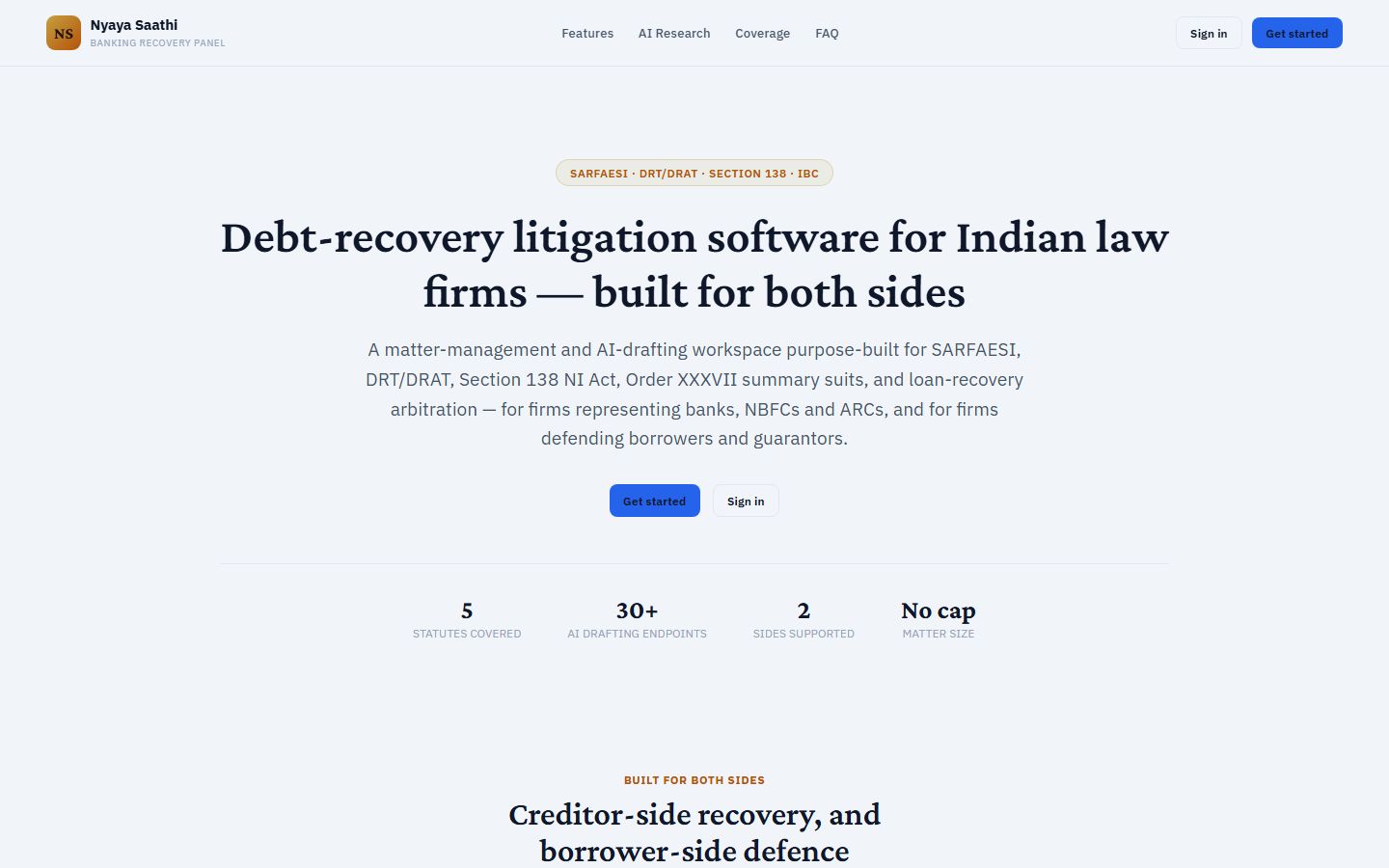
Debt-recovery litigation software for Indian law firms, built for both sides: firms acting for banks, NBFCs and ARCs, and firms defending borrowers and guarantors.
Visit banking.legalaidai.in ↗Recovery work runs on statutory clocks across several regimes at once: SARFAESI, the DRT and DRAT, Section 138 of the Negotiable Instruments Act, summary suits, arbitration and the IBC. A firm with a large portfolio has to track every notice, deadline and stage, and draft a high volume of documents that must be right and must cite real authority.
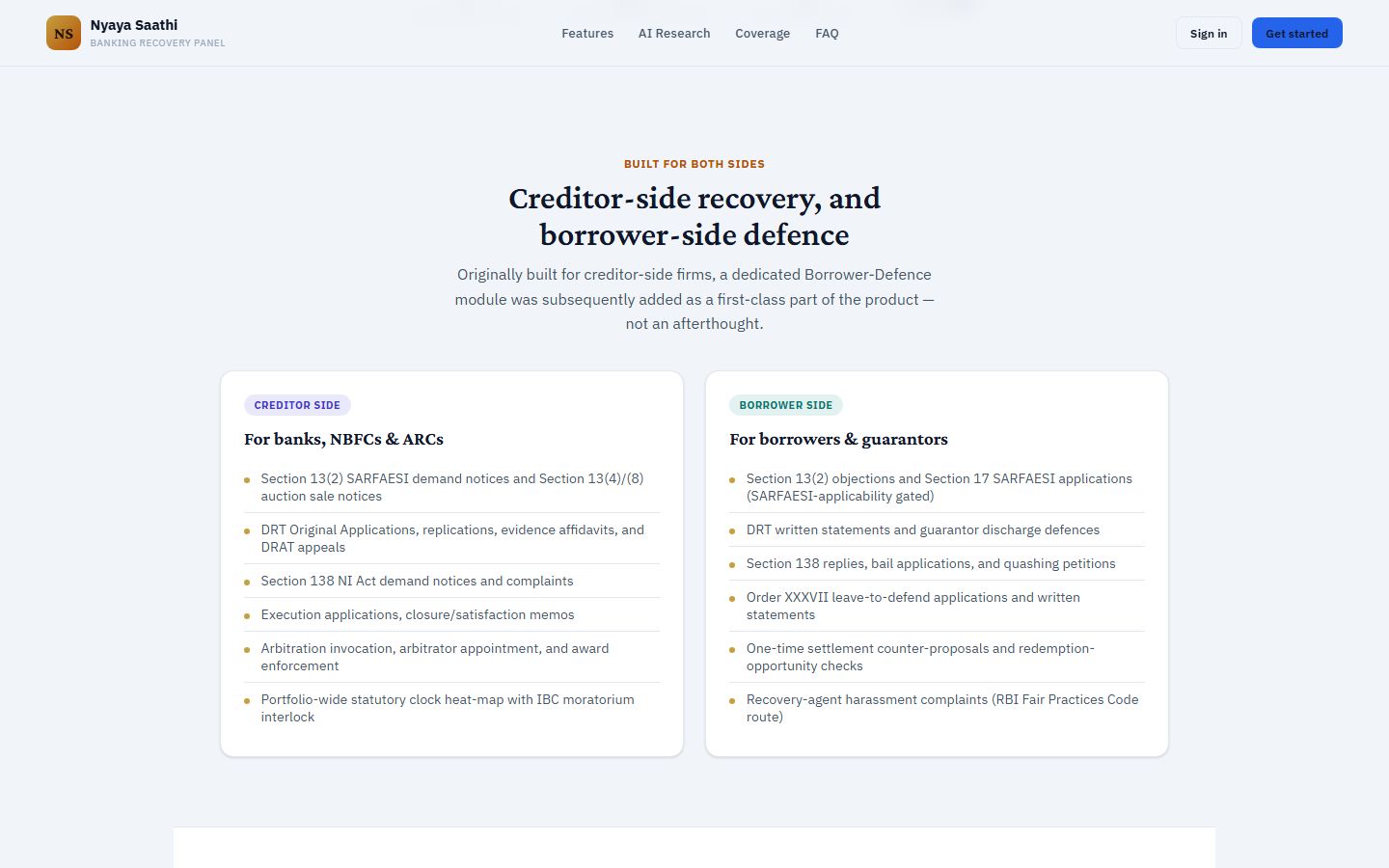
The platform was first built for creditor-side firms. A dedicated borrower-defence module was added later as a first-class part of the product, so firms on either side of a recovery dispute can work from the same system.
A matter-management and AI-drafting workspace with a creditor side and a borrower side.
SARFAESI demand notices and auction sale notices, DRT original applications, replications, evidence affidavits and DRAT appeals, Section 138 notices and complaints, execution applications, and arbitration invocation and award enforcement.
Section 13(2) objections and Section 17 applications, DRT written statements and guarantor discharge defences, Section 138 replies, bail and quashing petitions, leave-to-defend applications, one-time settlement counter-proposals, and recovery-agent harassment complaints.
A portfolio-wide heat-map of statutory deadlines, with an IBC moratorium interlock, to show which matters need attention.
Account briefing, an IBC conflict check, a redemption-opportunity assessment, and an AI narrative layer over the firm's own figures. The numbers are computed in code, never left to the model.
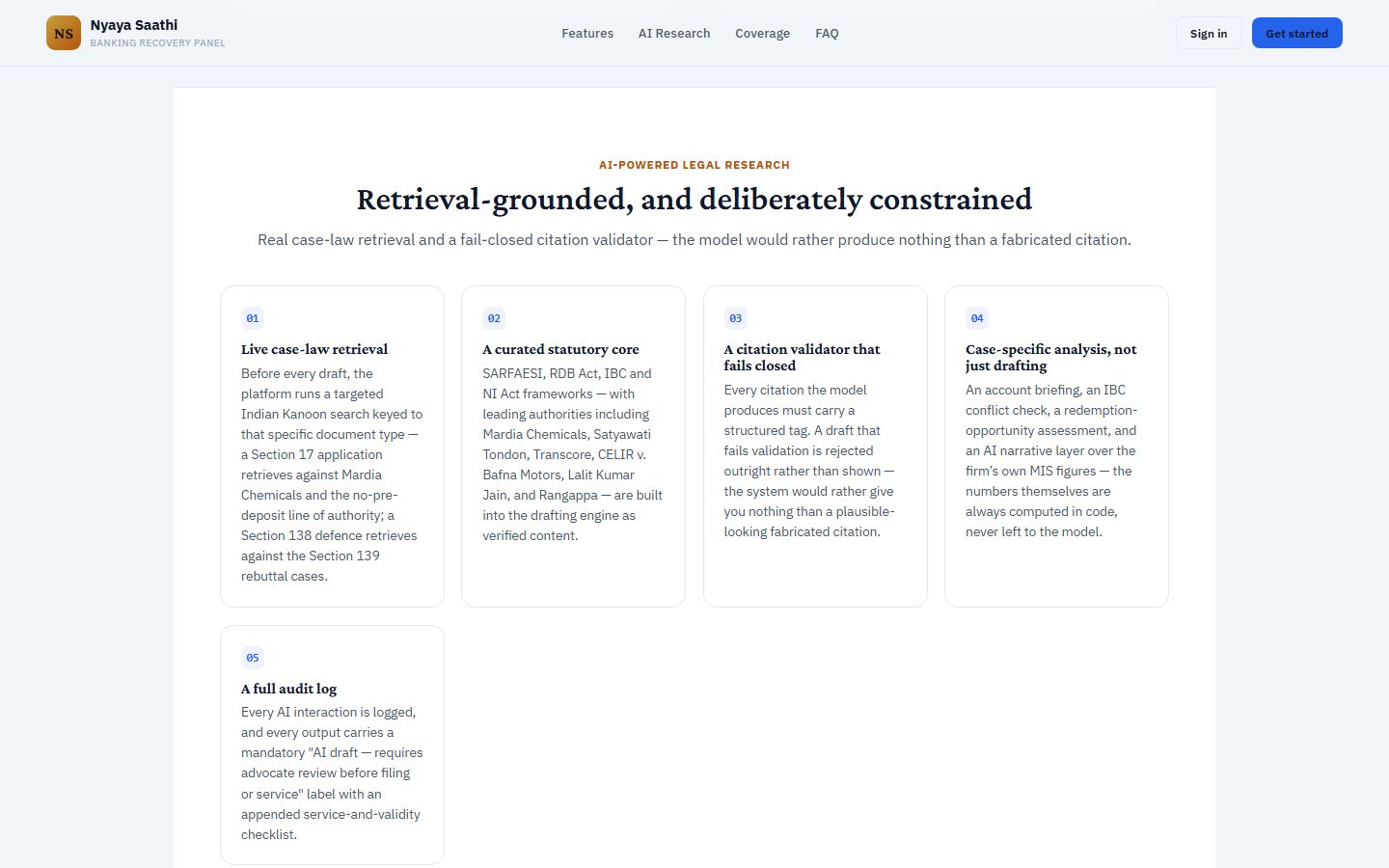
The drafting engine is designed around checking, not just generating.
The Banking Recovery Suite is in beta by invitation at banking.legalaidai.in, as part of the Nyaya Saathi platform.
It does not file, e-file or serve anything: its outputs are drafts for an advocate to review and sign. It has no eCourts or NJDG integration, and the hearing diary is entered by hand. Some limitation day-counts are flagged as pending confirmation by a practising advocate and shown as unverified. Client case data is not held in Nyaya Saathi's own database: it stays in each firm's own Google Drive or OneDrive, accessed through that advocate's own authorisation.
Tell us what is taking too much time or money. We will tell you what it takes to build a working system around it.
Tell us what you're trying to achieve →